Tuesday, February 28, 2017
Mother goddess from Samarra
A figure often interpreted as a depiction of a mother goddess from Samarra, ca 6000 BCE (Louvre Museum)
Venus Cucuteni-Trypillian
Ceramic Neolithic female figurine Cucuteni-Trypillian culture, ca. 5500-2750 BCE, Archaeology Museum Piatra Neamț
Etichette:
carved,
ceramic,
Cucuteni,
Cybele,
figurine,
idol,
mother goddess,
Neolithic,
stone,
Trypillian,
venus
The Venus of Dolní Vestonice
The Venus of Dolní Věstonice, one of the earliest known depictions of the human body, dates to approximately 29,000–25,000 BC (Gravettian culture of the Upper Paleolithic era)
Etichette:
ancient,
Dolní Věstonice,
gravettian culture,
idol,
mother goddess,
paleolithic,
statue,
venus
Venus von Willendorf
Etichette:
ancient,
carved,
idol,
mother goddess,
statue,
stone,
willendorf
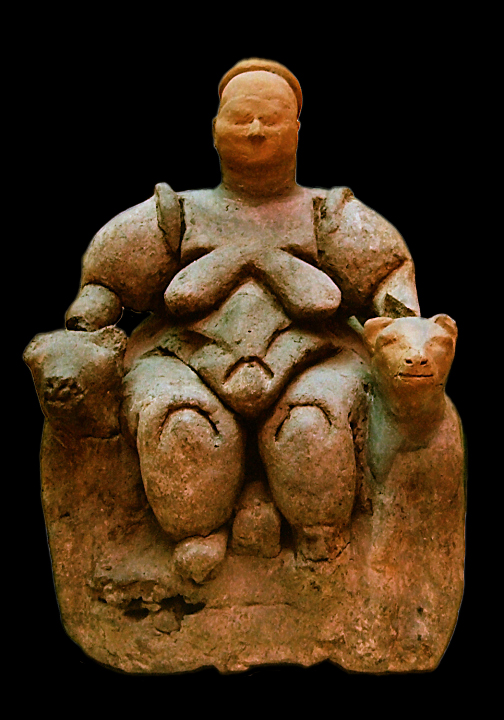
Seated Woman of Catalhoyuk
A mother goddess is a goddess who represents, or is a personification of nature, motherhood, fertility, creation, destruction or who embodies the bounty of the Earth. When equated with the Earth or the natural world, such goddesses are sometimes referred to as Mother Earth or as the Earth Mother.
Many different goddesses have represented motherhood in one way or another, and some have been associated with the birth of humanity as a whole, along with the universe and everything in it. Others have represented the fertility of the earth.
from wikipedia
Etichette:
alien,
alien city,
alien girl,
alien moon,
Atlantis,
Cybele,
mona lisa,
mother goddess
Subscribe to:
Posts (Atom)